 |
A biweekly news digest from the
National Institute of Standards and Technology |
| FEBRUARY 1, 2022 |
| |
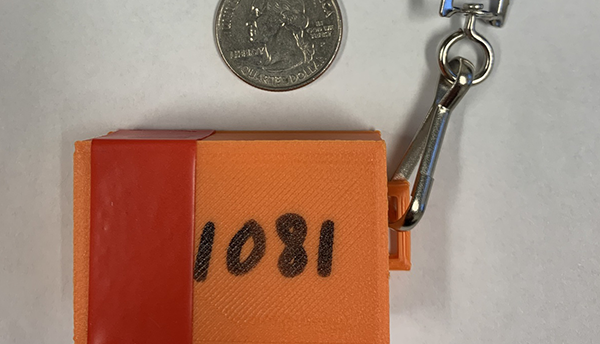
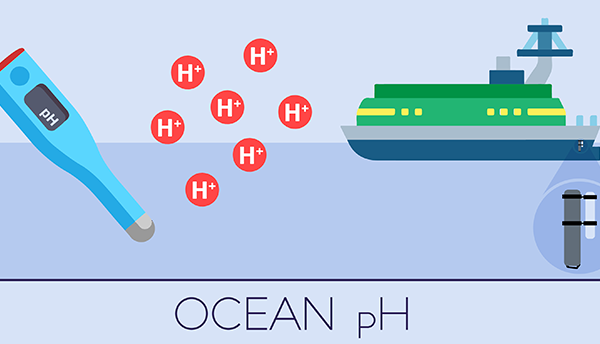
| | RNA Reference Materials Are Useful for Standardizing COVID-19 Tests, Study Shows Many labs are processing COVID-19 tests, but their results aren't always comparable. NIST collaborated with measurement institutes in the United Kingdom and Germany in an effort to better align lab results. | | NIST's Low-Cost Radio System Could Help Trace Disease Spread Using NIST's cryptographic know-how, researchers designed Bluetooth devices that can detect when people or animals come into close contact with each other. |  NIST Updates FIPS 201 Personal Identity Credential Standard The updated standard now allows federal employees to prove their identities with more flexible options like electronic tokens and one-time passwords. 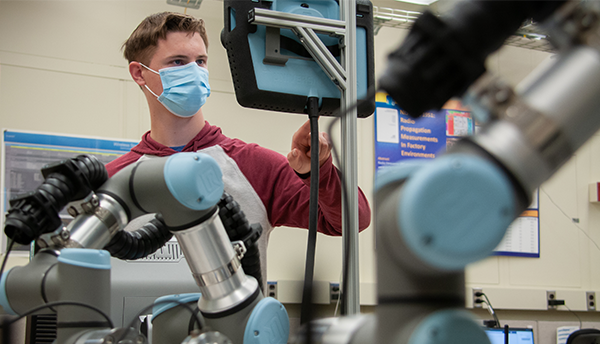 | Solving a Robotics Puzzle During a Summer Internship at NIST A high school student describes his "golden opportunity" to gain real-world engineering experience. | | | How Do You Measure the Acidity (pH) of the Ocean? A variety of instruments monitor the ocean for levels of acidity that could have impacts on living things — including us. | | |
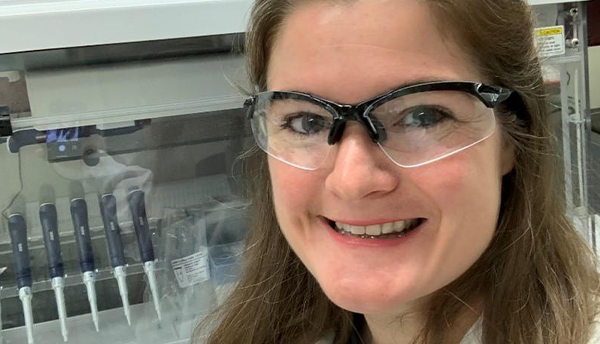
  Alongside outer space and the deep oceans, NIST researcher Ashley Boggs sees biological complexity as a great research frontier. We wrap up National Biotechnology Month with a look on LinkedIn at her work. | |
 | | MORE NEWS FROM NIST | "As demand for semiconductors will only increase, we need smart, strategic investments to shore up our domestic supply chain — and we need it now," said Secretary of Commerce Gina M. Raimondo. NIST plans to award nearly $19.8 million to support four centers that will provide hands-on technical expertise and assistance to local manufacturers. The chief of staff supports the NIST director on external outreach, top-level decision-making, internal communications and many other activities. Read more about this opportunity on USAJOBS. Applications are due Feb. 28, 2022. NIST's contributions to the world of fire safety run deep, from the standardization of smoke alarms in the 1960s to laying the groundwork for wildfire safety standards today. A new report from the RAND Corporation offers evidence of NIST's influence; read more at rand.org (external link). | | | |
 These best practices for managing ventilation and airflow, taken from experts across government agencies and professional associations, could help building managers improve indoor air quality during the pandemic, reducing exposure to infectious aerosols. This video was recently updated to reflect the latest ASHRAE guidance. |
Endnote: For Good Measure Our two leadoff stories this issue exemplify the different angles from which NIST is addressing the COVID-19 pandemic. Our first story shows how reference materials can help laboratories standardize and compare their PCR test results to further increase quality assurance. Our second story explains how a broad interdisciplinary team at NIST is developing a low-cost contact tracing tool that can track the outbreak of disease while preserving privacy. In addition, our featured video provides tips on how building managers can improve ventilation during the pandemic. Across our agency, the pandemic is being tackled through research from biologists, chemists, mathematicians, mechanical engineers, physicists, information scientists, communications researchers and many other professionals. To see many more NIST projects related to the coronavirus, see our NIST and COVID-19 page. —Ben P. Stein, Managing Editor |






No comments:
Post a Comment