New Building Standard Paves the Way for Collapse-Resistant Structures 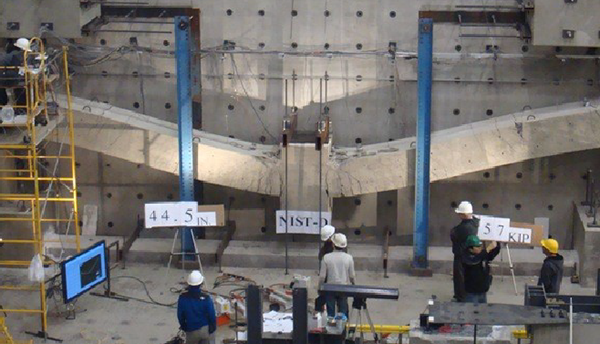 Buildings in the U.S. are generally designed to withstand the usual suspects: rain, wind, snow and the occasional earthquake. Abnormal events such as gas explosions, vehicle impacts or uncontrolled building fires are not typically a consideration. If vulnerable buildings face any of these unanticipated events, the results could be tragic. But now, a new building standard can help engineers prevent the worst. The American Society of Civil Engineers (ASCE) has released the ASCE/SEI 76-23 Standard for Mitigation of Disproportionate Collapse Potential in Buildings and Other Structures, the first national building standard of its kind. Developed over the course of a decade and informed by research led by the National Institute of Standards and Technology (NIST), the standard provides design requirements and guidance to keep small, isolated failures in a structure from propagating and bringing down the entire building or a major part of it — a phenomenon the standard defines as disproportionate collapse. | 










No comments:
Post a Comment