|
|
What to Know for Thursday, June 4th, 2026: |
1: Spousal Social Security top-up worth $300/month boosts household to $4,500 — but most couples don't ask for it |
 |
(Image Credit: Shutterstock) |
|
Spouse earning $1,200 can add $300 monthly by claiming spousal top-up: Rule: lower-earning spouse receives up to 50% of higher earner's Primary Insurance Amount (PIA) — in example, husband's full benefit $3,000, half = $1,500 ceiling; wife's own benefit $1,200; spousal top-up = $300 difference, raising her check to $1,500 and household total to $4,500 — "the SSA will pay it, but does not chase you down if you skip the question on the application." Two conditions: higher earner must file first, lower earner must ask explicitly on form SSA-2-BK: Most couples miss this because spousal portion requires explicit request — at full retirement age (67) no reduction, but if claimed at 62, both own benefit and spousal portion permanently smaller — $300/month compounds across 20-year retirement before any cost-of-living adjustments, with 2.8% COLA growing figure each year. Higher earner's claiming age more critical than lower earner's — shapes two lifetimes of income: When higher earner dies, surviving spouse steps up to 100% of his benefit (not 50%), so every dollar he adds by waiting to file flows through to her survivor check — filing at 62 instead of 67 permanently trims both his benefit and her eventual survivor check, making this "the hardest mistake to undo."
|
➜ Read the full article from Yahoo Finance here. |
|
|
|
|
2: Social Security phasing out paper checks by end of 2026 — less than 1% of beneficiaries still use them, SSA urges switch to digital |
 |
(Image Credit: Getty Images) |
|
Executive order mandates electronic-only federal payments by end of year: Trump administration signed executive order to modernize payments and promote "operational efficiency" — Social Security paper checks set to cease end of September 2026 (with limited exceptions), with full transition to electronic payments by end of year — less than 1% of beneficiaries (approximately 280,000) currently receive paper checks. Paper checks 16x more likely to be lost/stolen, cost $3+ each vs. pennies for electronic: SSA emphasizes safety and cost concerns — each paper check costs $3+ compared to electronic payments (20x more costly), and paper checks 16 times more likely to be lost, stolen, altered, or sent back undeliverable — "shift could save federal government millions annually." Multiple options: direct deposit, prepaid debit card, or waiver available: Switch to digital payments online through Social Security website (ssa.gov/myaccount) or through your bank — those without banking access can get prepaid debit card through Direct Express program (godirect.gov/gpw) — those unable to transition can request waiver by calling 1-877-874-6347.
|
➜ Read the full article from the Hill here. |
|
|
3: Medicare/Medicaid fraud won't disappear despite crackdowns — structural design creates unlimited incentive for billing excess |
 |
(Image Credit: Getty Images) |
|
Trump administration estimates $100 billion annual Medicaid fraud, shut down 800 LA hospices — but history shows fraud just shifts, doesn't vanish: CMS Administrator Mehmet Oz announced crackdown on healthcare fraud, but GAO has designated both programs as "high-risk for fraud" for 23 consecutive years and every presidential administration since Medicare/Medicaid created in 1965 has announced similar crackdowns — fraud doesn't disappear, it simply "shifts to a new billing code, specialty, or geography—and resumes at roughly the same scale." Fundamental flaw: Medicare's open-ended entitlement with no budget creates continuous pressure for more billing: Unlike other major health systems worldwide that operate within budgets and tolerate waiting lists, Medicare promises to pay for "essentially all health care that a senior needs" with no defined limit and no administrator empowered to say "enough" — "when there is no budget, there is no pressure on spending. And when there is no pressure on spending, incentives flow in only one direction: more care, more billing, and more cost." Fraud exists on continuum with normal billing — Medicare itself reports tens of billions on unnecessary/harmful procedures: Fraud not in separate universe from ordinary billing but on continuum from essential care to outright scams — Medicare reports tens of billions spent annually on unnecessary back surgeries, stents, knee arthroscopies, skin grafts, diagnostic tests that harm patients — "combining commitment to all needed care with unlimited spending capacity creates pressures toward waste and fraud so powerful that no regulation or penalty can meaningfully contain them."
|
➜ Read the full article from City Journal here. |
 |
|
|
90% of American seniors are on the wrong Medicare plan. Thankfully, Chapter is here to help! They can help you switch to the right plan and save $$$. Chapter saves the average senior $1,100 per year! Plus, it is 100% risk-free! Give them a call to find out how much you could save: 539-205-2147. |
askchapter.org/insider |
|
|
|
|
|
Here’s What You Missed on YouTube: |
Check out our new YouTube videos for Thursday, June 4th. |
5 Bills You Can Stop Paying After 65 — Most People Don't Know #2 |
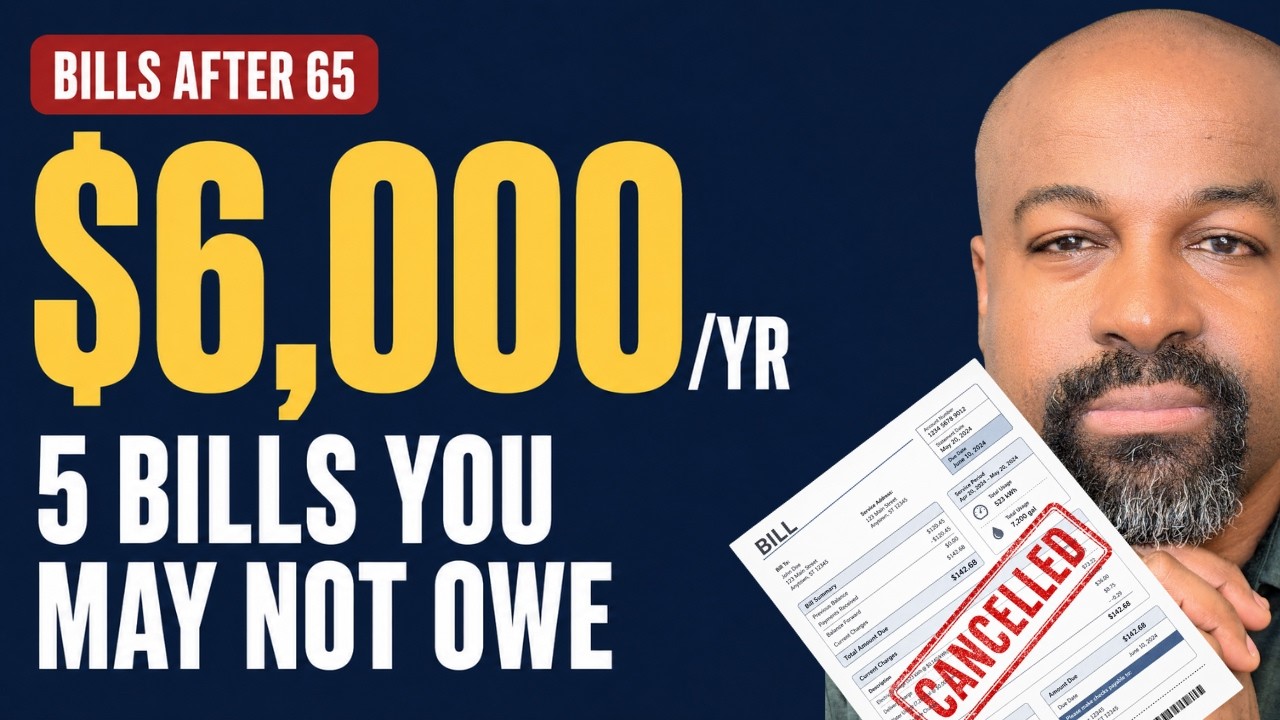 |
5 Bills You Can Stop Paying After 65 — Most People Don't Know #2 |
|
|
|
|
|
|
This newsletter is for information only. Always confirm your options directly with Social Security, Medicare, Medicaid, or a qualified advisor before making big decisions about your benefits. |
*View our Advertising Disclosure |
|


No comments:
Post a Comment